The critical aspect of the insulation choices in the field of electrical insulation is that efficiency, safety, and performance are guaranteed. A variety of options are available out of which Aramid insulation paper and traditional insulation materials are the most frequently encountered. This piece intends to evaluate the distinctiveness of Aramid paper from the typical insulation materials in a bid to provide an insight on which may be the best fit for your requirements.
The Gist of the Aramid Insulation Paper
Aramid insulation paper, on the other hand, is a manmade high-performance material produced from synthetic fibers that have high thermal, mechanical, and chemical properties. One of the known materials created from Aramid fibers is Nomex which is, in particular, played in its heat resistance and durability. The Aramid paper is often applied to many entities wherein include transformers, motors, and generators that face very high temperatures and mechanical stresses which is its ability to case them.
Main Aspects of Aramid Insulation Paper
- Heat Resistance: Aramid paper is a paper that can take in high amounts of energy without being spoilt, and it is therefore very good for devices that need the stability of the temperature.
- Mechanical Strength: This material has good mechanical properties such as high tensile strength and tear resistance which, in turn, provide durability under stress conditions.
- Chemical Stability: Aramid insulation possesses good properties such as stability against chemicals and moisture resistance, and they can, therefore, stay operational for long times, even in regimes that are high in corrosion.
- Dielectric Properties: This type of paper has a dielectric strength that is strong enough to make it suitable for successful electrical insulation.
Key Characteristics of Conventional Insulation Materials
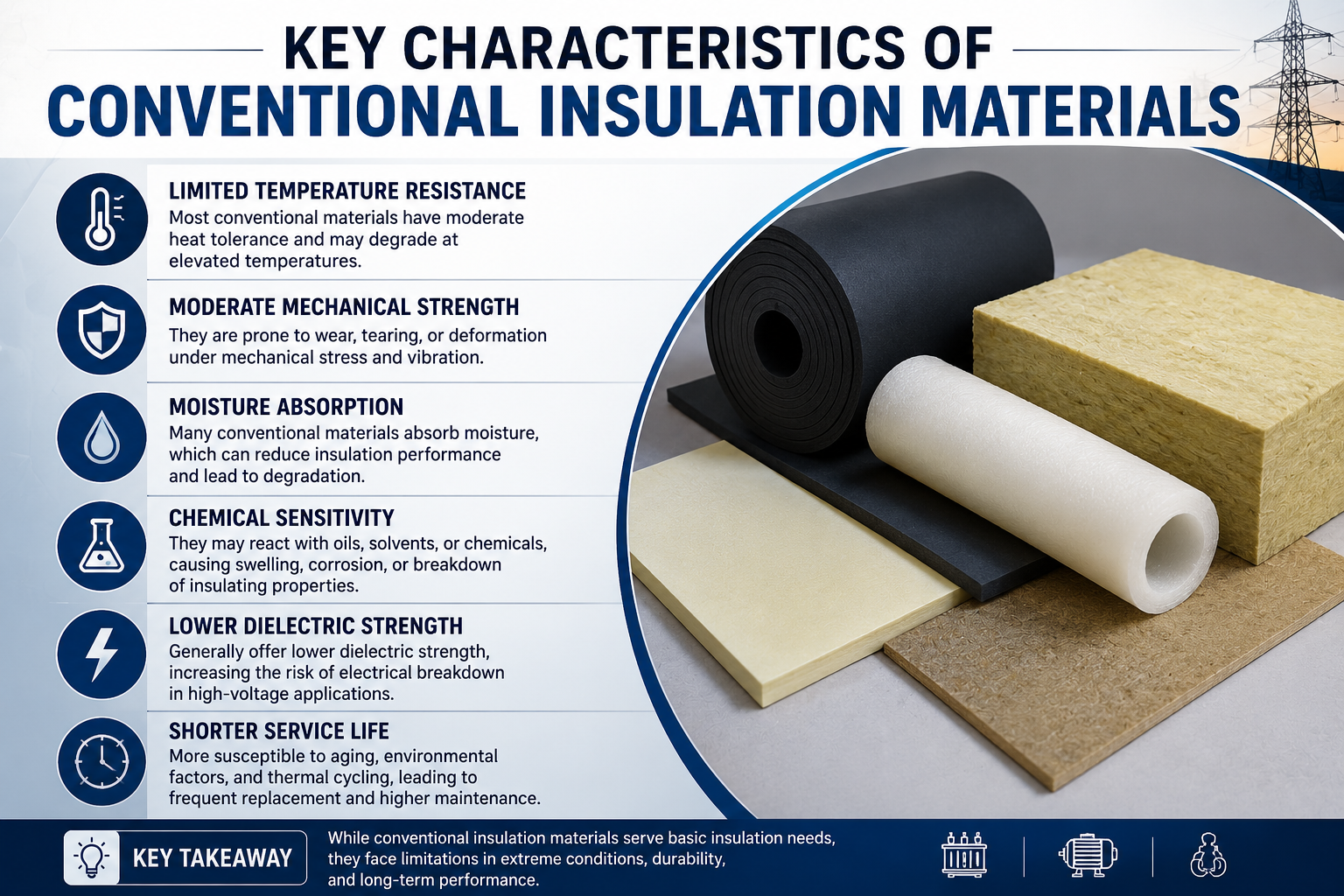
The common insulation materials such as glass fiber, mica, and polyester are predominant in numerous applications due to their cost-efficiency and superior insulating performance. However, these materials have their trade-offs in terms of their properties and are applicable in peculiar cases.
Concerning Traditional Insulation Materials
- Glass Fiber: Glass fiber is a well-known insulating material that is often used in electric and thermal insulation due to its thermal and mechanical strength.
- Mica: Mica material has the desired properties of high dielectric strength and thermal resistance, making it suitable for high-temperature environments.
- Polyester: This is preferred for most uses, because of the cost-effectiveness and ease of handling it provides and can be used in applications that are not exposed to the extreme heat.
Aramid Insulation Paper vs. Traditional Materials: A Comparative Analysis
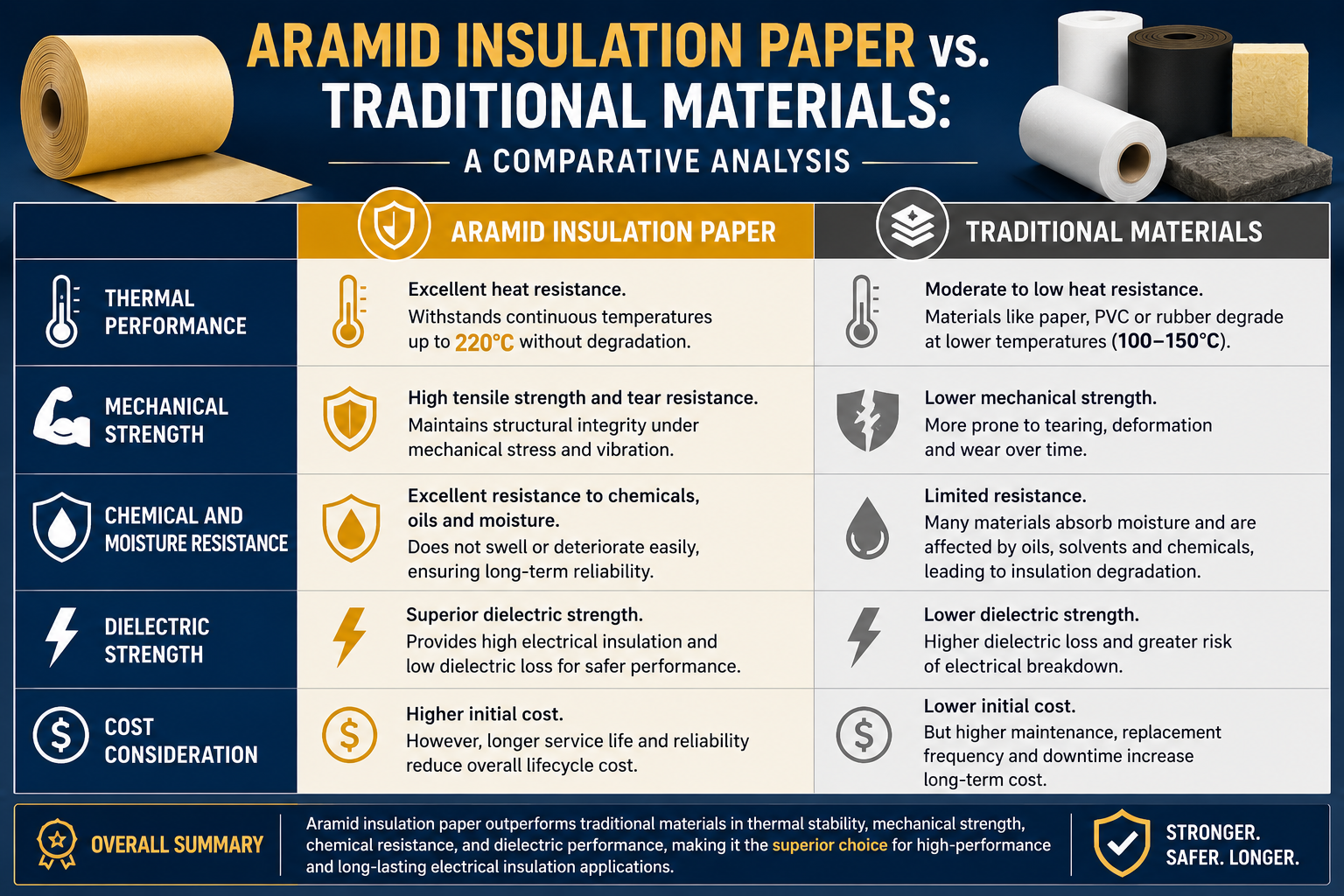
Upon making a comparison of Aramid insulation paper and standard materials, the following criteria will be considered- the performance, cost, and application requirements. Here’s a detailed breakdown of these comparisons in varying capacities:
(a) Thermal Performance
Insulation materials that are able to cope up with the high temperatures present in electrical systems are ought to be durable. The Aramid paper is able to resist the thermal stress presented as it can mostly hold its integrity even under a temperature of 200°C. The glass fiber and mica, on the other hand, are good in thermal resistance but polyester is not able to resist high temperatures.
(b) Mechanical Strength
Aramid paper provides higher tensile strength, and flexibility of mechanical sustenance for the improvement of the durable nature of any equipment as compared to the traditional materials. The transition takes the main role in the case of those devices that made the most of the tearing or wearing out of the insulation at the place where there are stresses.
(c) Chemical and Moisture Resistance
The big feature of Aramid insulation paper is that it has chemical and moisture resistance mechanisms built into its structure, which suit it with good long-term performance properties, even in environmentally tough conditions. Conversely, the likes of mica and glass fiber need to be treated additionally for equal moisture resistance.
Insulation Tapes and Their Function
Insulation tapes are widely used with insulation papers for extra protection and control during use in different situations. Both the Aramid-based and other traditional insulation tapes have their respective roles in the industry, the selection of which will be based on particular needs and performance requirements.
(d) Dielectric Strength
Both Aramid paper and materials like mica offer great insulation capabilities in terms of their dielectric strengths. Aramid paper often possesses better and more consistent electrical insulation because of its homogeneous structure than mica, which has layered structure.
(e) Cost Consideration
The cost issue is undoubtedly one of the most significant considerations in the decision-making process. Traditional materials that include glass fiber and polyester are some of the cheaper materials as compared to Aramid papers. Nevertheless, the long-term durability and performance of Aramid insulation can make it easy to understand the reason for it to be the main decision even if it commands higher costs initially under those installations which conduct critical operations where reliability is an issue.
Summary: Which One Is Better?
The decision as to whether one goes for Aramid insulation paper or the traditional materials is based on the particular application of the material whereby the former is more suitable in the case of applications. The monolithic structure of Aramid paper demands it to be highly heat-resistant and as well extremely strong and has good chemical stability while the conventional materials are also context-specific.
By thoroughly sorting through the constraint characteristics and benefits, one can come up with a solution that is best suited for the insulation needs. Regardless of the focus being on efficiency or cost, both the types of material present useful solutions to the electrical insulation problems.
From my standpoint, the use of Aramid insulation paper has proved to be very efficient in the application of a highly hot and mechanically forced environment; moreover, it is one of the most reliable means. Eventually, adaptation of performances on the basis of particular application requirements will definitely be the best way to deal with your insulation necessities.
Related Post:


